
On the inter-urban road shown in the image, is it permissible to pull over or park on the passable unpaved hard shoulder?
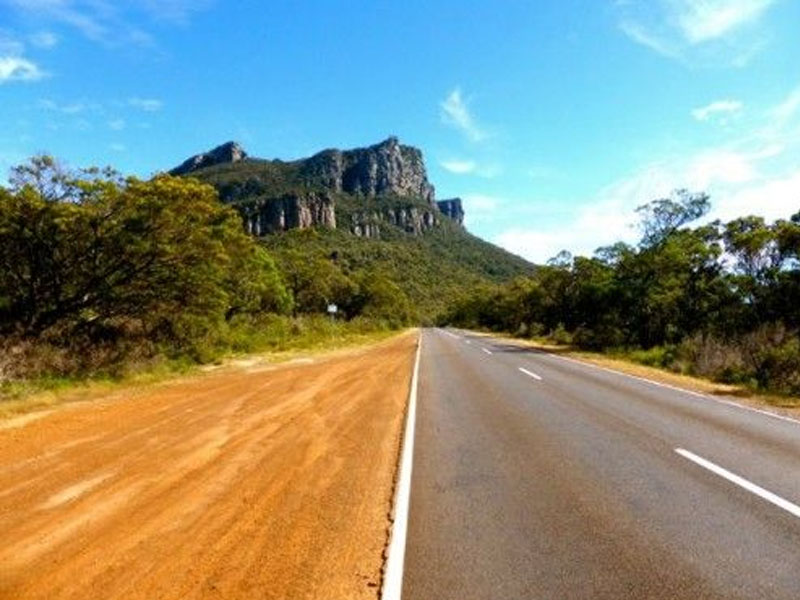
- A)No, because it is passable.✓ Correct answer
- B)Yes, to pull over, but not to park.
- C)Yes, because it is unpaved.
Why this is the correct answer
On inter-urban roads (roads outside towns and cities), stopping or parking must ALWAYS be done: (1) off the carriageway, (2) on the right-hand side, and (3) leaving the ENTIRE passable hard shoulder completely free. This means that on an inter-urban road you cannot pull over (stop briefly) OR park on the passable hard shoulder. Both are prohibited. The hard shoulder must remain entirely clear because it serves critical safety functions: it provides space for cyclists, slow-moving vehicles, breakdowns, and emergency situations. In the image, the wide unpaved strip next to the paved carriageway IS the hard shoulder. Even though it looks spacious, you are not allowed to stop or park on any part of it. Your vehicle would need to be placed completely BEYOND the hard shoulder (i.e., off the road entirely) if you needed to stop. Why are the other answers wrong? - Answer B is wrong because it suggests pulling over on the hard shoulder is allowed. It is not -- the prohibition covers both stopping AND parking. - Answer C is wrong because the surface type (paved or unpaved) makes no difference. Whether the hard shoulder is asphalt, gravel, or dirt, the rule is the same: keep it completely free. Key rule to remember: Inter-urban road = stop/park OUTSIDE the carriageway AND outside the passable hard shoulder. Urban road or through-road (travesia) = you MAY stop/park on the carriageway or hard shoulder, keeping as close to the right edge as possible (or left on one-way streets), as long as you leave at least 3 metres free for traffic.